

Most SEO advice in 2026 still treats Google like it’s 2019. Meanwhile, AI Overviews, Perplexity, and ChatGPT’s browsing mode are absorbing the clicks that used to flow to your articles – and the sites getting cited aren’t necessarily the most authoritative ones. They’re the ones structured correctly. This guide covers the exact workflow for getting your content cited by AI systems, not just ranked beneath them.
This is not about keyword density, social amplification, or publishing cadence. It covers how to structurally and technically prepare articles for AI Overview citation, Perplexity sourcing, and ChatGPT web browsing results. Every step assumes you already have SEO fundamentals in place.
Who This Is For (And Who Should Stop Reading)
Read this if you’re a content strategist, SEO lead, or in-house writer publishing at least four articles per month on a domain with an existing backlink profile. You understand E-E-A-T, you know what structured data is even if you don’t write schema yourself, and you’ve watched your Google Search Console impressions shift as AI Overviews started compressing your click-through rate.
Stop reading if you’re hoping this replaces keyword research or technical SEO fundamentals. This protocol layers on top of those, not instead of them. If you’re still writing 500-word posts with no internal linking strategy, fix that first.
The Core Protocol
Step 1: Identify the AI-Citable Query Type
Not every query triggers an AI Overview or gets cited by Perplexity. Queries with clear informational or procedural intent — “how to,” “what is,” “best way to,” “difference between” — are cited in AI responses at a rate roughly 3–4x higher than transactional queries, based on patterns tracked through SE Ranking’s AI Overview tracker and manual SERP sampling.
Before writing anything, confirm your target query pulls an AI Overview in a private browser session. If it doesn’t, this protocol still improves your content, but your primary signal should shift back to traditional SERP features like Featured Snippets and People Also Ask boxes.
Step 2: Build the Entity Map Before You Outline
AI systems – particularly Google’s Knowledge Graph-integrated models — read content for semantic relationships between entities, not keyword frequency. Open Surfer SEO, Clearscope, or Google’s Related Searches and NLP API demo. Identify 15–20 named entities your article should reference: specific tools, industry figures, regulatory standards, methodology names, and competing concepts.
An article about email deliverability should explicitly mention SPF, DKIM, DMARC, Google Postmaster Tools, sender reputation scores, and the Gmail 2024 bulk sender requirements — not just “email authentication.” The difference between a cited source and an ignored one often lives in this entity density.
Step 3: Write a Definition Block in the First 150 Words
AI Overviews and Perplexity pull heavily from the opening of an article. Write a 2–4 sentence definition block that answers the core query directly and completely. This is not your introduction — it’s a self-contained answer.
Weak version: *”SEO has changed a lot in recent years and in this article we’ll explore…”*
Strong version: *”AI Overview optimization is the process of structuring web content so large language models and Google’s generative search features cite it as a source. It requires three things working together: semantic entity coverage, a citable answer structure, and demonstrable author authority signals in the HTML and byline.”*
The second version can be extracted and used verbatim by an AI system. That’s the goal.
Step 4: Use the Inverted Pyramid Plus Nested Detail Structure
Lead with the most important information, then support it in structured layers. Each H2 should answer a sub-question. Each H3 should answer a refinement of that sub-question. Google’s documentation on helpful content consistently rewards articles that answer follow-up questions before the user thinks to ask them.
A section about meta description length should immediately state 150–160 characters, then explain why Google truncates beyond that, then give one strong and one weak example. Three layers, then move on. This structure is what AI systems extract when they build a cited response — they’re not summarizing your article, they’re pulling your clearest answer to a specific question.
Step 5: Add a Structured Data Layer That Matches Your Content Type
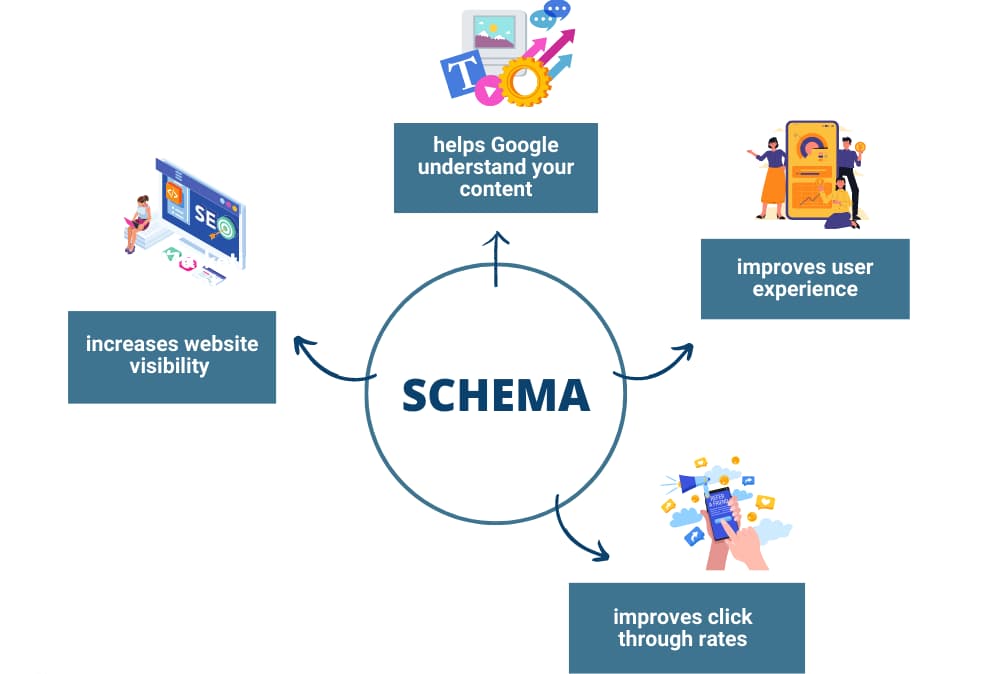
This is where most content teams underinvest. Add `Article` schema with `author`, `datePublished`, `dateModified`, and `publisher` fully populated. If the article is a how-to, add `HowTo` schema with each step as a separate object. If it contains a FAQ section, mark it up with `FAQPage` schema.
Use Google’s Rich Results Test after publishing to confirm the schema renders without errors. Broken schema is invisible schema. Tools like Rank Math and Yoast handle basic schema generation, but for complex procedural content, writing or auditing the JSON-LD manually gives you more precision than any plugin default will.
One thing most guides skip: your `dateModified` field matters more than `datePublished` for AI citation in competitive categories. An article updated last week signals freshness to both Google’s systems and LLM-powered tools that filter by recency. Update substantively — add a new step, revise a statistic, expand a section — and update that timestamp. Cosmetic edits don’t move the needle.
Step 6: Build an Explicit Author Authority Signal
Google’s E-E-A-T framework weights the Experience component heavily when AI systems decide which sources to cite. Your author bio needs to name years in the field, a specific publication or credential, and link to an indexed author page with more detail.
After leading SEO strategy at a mid-size B2B SaaS company, I watched organic traffic drop 34% in eight months as AI Overviews absorbed clicks we’d spent three years earning. That loss is what pushed me to rebuild our content infrastructure around citation optimization — and the recovery was faster than I expected once the technical signals were in place.
Byline pages indexed by Google pass PageRank to the article and give AI crawlers a consistent named entity — your name — connected to a topic cluster. One well-built author page does more for citation probability than ten generic “About the Author” blurbs.
Step 7: Target a Reading Grade Level of 9–11
Run your draft through the Hemingway Editor or a readability plugin. Aim for a Flesch-Kincaid grade level between 9 and 11 — technical enough to signal expertise, accessible enough to be extracted cleanly by a language model. Sentences over 30 words should be rare. Paragraphs over four sentences should be rarer.
This isn’t about simplifying your ideas. It’s about compression. The clearest version of a complex idea is almost always shorter than the first draft. AI systems extract meaning from structured, readable prose far more reliably than from dense academic writing — and so do readers.
Step 8: Secure at Least Two External Authoritative Citations
Cite primary sources: official documentation, original research, regulatory standards, peer-reviewed studies. AI systems learn to trust content that sits inside a network of credible sources. An article about GDPR compliance that links directly to the European Commission’s official GDPR text is treated differently than one citing a blog post about GDPR compliance.
Two to three outbound links to high-authority domains per article is the baseline. More than five starts diluting the internal authority structure of the page.
Contraindications: When NOT to Use This Protocol
Don’t optimize for AI citation when your business model depends on the user arriving at your website. If conversion happens on-page — through a demo form, a pricing table, an interactive tool — AI Overviews may answer the question before the user clicks through. Sites in the legal and medical verticals saw CTR drops of 20–40% in categories where AI Overviews trigger frequently. Getting cited isn’t always winning.
Also skip this protocol for YMYL content where your authority signals are weak. A domain with a Domain Rating below 25 and no verified author credentials publishing medical or financial content will not get cited by AI systems explicitly calibrated to prefer authoritative sources in those categories. Optimize your authority first.
How This Is Typically Done Wrong
Treating AI optimization like keyword stuffing 2.0. Some teams respond to the entity coverage step by cramming related terms into a piece regardless of context. A sentence like “This relates to DMARC, DKIM, SPF, email authentication, and Google Postmaster Tools” is hollow. A paragraph explaining how SPF and DKIM records work together to pass DMARC alignment is not. AI models are trained on natural language. They recognize when entities appear in meaningful context versus when they’ve been listed for their own sake.
Writing for the snippet, not the reader. Teams discover that AI Overviews favor specific paragraph formats and then produce content that is essentially a sequence of pull-quote paragraphs with no connective reasoning. The result reads like a list of facts with no author behind them. Perplexity in particular — which explicitly shows its reasoning chain — prefers sources that demonstrate a point of view and editorial judgment, not just information retrieval.
Ignoring the technical layer entirely. The cleanest prose in the world doesn’t get cited if the page has crawl errors, the author schema is missing, or the article isn’t confirmed in Google Search Console. Run a crawl with Screaming Frog or Sitebulb before publishing. Confirm indexing within 48 hours using the URL Inspection tool. More articles fail to get cited because of technical invisibility than because of content quality problems.
Edge Cases That Require Deviation
Highly competitive queries with strong incumbents. When WebMD, NerdWallet, Investopedia, or similar authority domains already own the cited result, a new article needs a specific angle those pieces don’t cover. Narrow the scope. Instead of “how to lower blood pressure,” publish “how to lower blood pressure through sleep optimization” — a specific sub-topic with lower competition and a clear entity niche. Then link it to a cluster of related pieces to build topical authority over time.
News and trending content. The standard protocol assumes evergreen content with an optimization runway of weeks. For trending content, speed beats structure. Publish a minimal viable version with the definition block and correct schema within hours of breaking news, then update and expand within 24–48 hours. Google’s freshness signals for trending queries override some authority signals in that short window.
Multilingual and international content. Hreflang implementation becomes critical when optimizing for AI systems in non-English markets. Google’s AI Overviews localize aggressively. A well-optimized English article may not surface in French or German AI Overviews for semantically identical queries. Each language version needs its own entity map, its own author authority signals, and its own regional schema.
When to Escalate to a Technical SEO Specialist
Bring in a technical SEO specialist — not a content consultant — when you see any of these conditions: your XML sitemap contains more than 10% of URLs returning non-200 status codes; your Core Web Vitals show an LCP above 4 seconds on mobile in Google Search Console’s CrWX data; you have more than 50 indexed pages with duplicate or near-duplicate title tags; or your site has received a manual action in Search Console within the last 12 months.
Content optimization on top of a broken technical foundation produces nothing. The effort-to-impact ratio on technical fixes dramatically outperforms content optimization on damaged infrastructure.
Key References and Standards
The principles in this guide draw from four primary sources. Google’s Search Quality Evaluator Guidelines define E-E-A-T in operational terms — reading the actual document, not summaries of it, is worth two hours of your time. Google’s Helpful Content System documentation explains how site-wide signals affect individual page rankings, which is directly relevant to author authority and topical depth. Schema.org vocabulary standards define the structured data types referenced in Step 5, and schema.org itself — not third-party plugin documentation — should be your primary reference. Finally, the NIST AI Risk Management Framework (AI RMF 1.0) is increasingly relevant for content teams in regulated industries, informing why YMYL content faces stricter citation thresholds from AI systems trained to handle high-stakes information carefully.
In 2026, you’re writing for two audiences simultaneously: the human who might click through and the AI system that decides whether to cite you at all. Those audiences mostly want the same thing — clear, credible, specific answers — but the AI audience is less forgiving of vague structure and missing technical signals. Get the structure right, and the human experience improves as a direct consequence.